To celebrate its 60th birthday the NME recently released its list of the 100 greatest tracks of its lifetime. Whilst such a list can never be taken entirely seriously, it does offer an interesting insight into current zeitgeists. What's most striking about this particular list is the dominance of Manchester bands in the top ten. Tony Wilson described Joy Division/New Order, The Smiths, The Stone Roses, The Happy Mondays and Oasis as the five 'great' Manchester bands. Of these, the Mondays are the only band who don't make the top twenty. Here is a list of the top ten, with the Manchester bands in bold:
1. Joy Division – 'Love Will Tear Us Apart'
2. Pulp – 'Common People'
3. David Bowie – '"Heroes"'
4. The Beach Boys – 'Good Vibratons'
5. New Order – 'Blue Monday'
6. The Stone Roses – 'She Bangs The Drums'
7. The Smiths – 'There Is A Light That Never Goes Out'
8. The Specials – 'Ghost Town'
9. Dizzee Rascal – 'Fix Up, Look Sharp'
10. Oasis – 'Wonderwall'
The five tracks provide a useful timeline of the development of Manchester music during its golden age. Love Will Tear Us Apart was released in April 1980; Blue Monday was released March 1983; There is a Light features on the Smiths' third album The Queen is Dead which was released in June 1986; She Bangs the Drums was released in July 1989; and Wonderwall was released in October 1995. The obvious markers for this period are the election of Margaret Thatcher in 1979 and Tony Blair in 1997, it all took place during this 18-year period of Conservative government in a city that was always defiantly Labour.
Another defining aspect of this period was the City of Liverpool's footballing dominance. In 1976, Liverpool pulled away from Arsenal to become the most successful team in England, with nine league titles. It was a position they would go on to consolidate, winning another nine titles over the next 14 years. When Manchester United won their eighth title in 1993, Liverpool responded (perhaps a touch hubristically) by saying "Come back when you've won 18." The rivalry between the two cities not makes for a fascinating contest in terms of the two football teams but also in terms of its bands, with the Beatles having been made such a huge impact in the 1960s. I've argued previously that whilst we should admire the band's success and respect their links with the city, the Beatles belong to Liverpool in the same way George Best belongs to Belfast. We can see the similarities in the way both the Beatles and Best (the 'fifth Beatle') invested their earnings in their adopted cities of London and Manchester, the Beatles with Apple Records and Best with his nightclubs and fashion boutiques. In 2002, Liverpool Airport was re-named Liverpool John Lennon. In 2006, Belfast City Airport was re-named after George Best.
Manchester music has received renewed attention with the re-formation of the Stone Roses, who play their massive homecoming gigs at Heaton Park this weekend. Along with the Smiths, the Happy Mondays and and Oasis, all these bands are closely associated with Manchester (not to mention the Buzzcocks, the Fall, John Cooper Clarke, Simply Red, 808 State, A Guy Called Gerald, James, the Ruthless Rap Assassins and a lengthy list of others). But perhaps the most important contribution came from Joy Division/New Order who, unlike the Beatles, invested their profits back into their home city, through projects like Factory Records and the Hacienda, raising Manchester's profile and preparing the ground for two ambitious Olympic bids and its subsequent marketing as a 'global city'. The five tracks above provide the soundtrack for a difficult period in the city's history, but one from which it emerged with a positive outlook thanks in part to the band(s) whose songs the NME now considers the greatest and the fifth greatest.
Wednesday, 27 June 2012
Tuesday, 19 June 2012
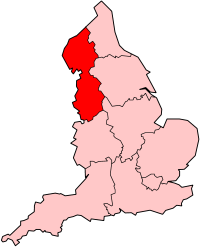
Would Liverpool make a better capital of the North West?
The Marxist historian Eric Hobsbawm (whose book The Age of Revolution provides a great introduction to the history of Manchester) once said that 'the imagined community of millions seems more real as a team of eleven named people'. It's with this in mind that I've suggested Amos, Simpson, Baines, Jagielka, Kelly, Jones, Osman, Rodwell, Gerrard, Welbeck and Rooney as my starting eleven to represent the imagined community of around 6.5m that is the North West of England. If New Labour had had their way then we may have had a directly elected regional assembly along the lines of the ones in Scotland (pop. 5m), Wales (pop. 3m) and Northern Ireland (pop. 2m). Their mistake was to assume that the North East was the best place to put this idea to a referendum (with 700,000 voting against, 200,000 voting in favour).
The sticking point for any discussion of regionalism in the North West will always be around where to have the 'capital'. The diplomatic solution (to avoid any entanglement in the Manchester-Liverpool rivalry) would be to have it in Warrington or Preston - but then when it came to marketing the North West to the rest of the world, we would struggle to make the case for connecting the regional capital with regional identity. A better solution would be to opt for one of the two and make it very clear from the start why.
In order to make regionalism work, it has to be decentralised. It wouldn't make sense to put the capital in Manchester because Manchester doesn't need the extra investment (we have the top two football teams in England, the BBC's MediaCity development and Manchester Airport already). Manchester is the economic heart of the North West and its financial capital. One of the main obstacles towards gaining support for regional devolution would probably be trying to persuade people that it wouldn't just benefit Manchester at everyone else's expense. This is why Liverpool would be the smarter choice. Not only is it by far the grandest-looking city in the whole of the North (really only rivalled by London and Edinburgh in the rest of the UK) but it could also do with the extra investment. An iconic North West Parliament Building overlooking the Mersey would make sense in terms of selling the idea of the North West to the rest of the world. Just as Scotland has Edinburgh and Glasgow, the US has Washington DC and New York, with Liverpool and Manchester both on board, we would be able to make the idea of regional devolution work. Along with the football team, this would be a fitting way to mark the region's proud history of economic independence as the centre of the global cotton trade in the hundred years from the end of the Napoleonic Wars to the beginning of the First World War. In order to succeed where others have failed, it would require a radical effort on the part of politicians in Greater Manchester to push for devolution from London to Liverpool.
The sticking point for any discussion of regionalism in the North West will always be around where to have the 'capital'. The diplomatic solution (to avoid any entanglement in the Manchester-Liverpool rivalry) would be to have it in Warrington or Preston - but then when it came to marketing the North West to the rest of the world, we would struggle to make the case for connecting the regional capital with regional identity. A better solution would be to opt for one of the two and make it very clear from the start why.
In order to make regionalism work, it has to be decentralised. It wouldn't make sense to put the capital in Manchester because Manchester doesn't need the extra investment (we have the top two football teams in England, the BBC's MediaCity development and Manchester Airport already). Manchester is the economic heart of the North West and its financial capital. One of the main obstacles towards gaining support for regional devolution would probably be trying to persuade people that it wouldn't just benefit Manchester at everyone else's expense. This is why Liverpool would be the smarter choice. Not only is it by far the grandest-looking city in the whole of the North (really only rivalled by London and Edinburgh in the rest of the UK) but it could also do with the extra investment. An iconic North West Parliament Building overlooking the Mersey would make sense in terms of selling the idea of the North West to the rest of the world. Just as Scotland has Edinburgh and Glasgow, the US has Washington DC and New York, with Liverpool and Manchester both on board, we would be able to make the idea of regional devolution work. Along with the football team, this would be a fitting way to mark the region's proud history of economic independence as the centre of the global cotton trade in the hundred years from the end of the Napoleonic Wars to the beginning of the First World War. In order to succeed where others have failed, it would require a radical effort on the part of politicians in Greater Manchester to push for devolution from London to Liverpool.
Sunday, 10 June 2012
If the North West had a football team...
This is
my tribute to the late Tony Wilson, who will be remembered for many things, not
least his commitment to the unfashionable and even much-derrided idea of
elected regional assemblies. It links with the role of the North West of England as the birthplace of modern football. It was when legislation was
passed in parliament limiting working hours (something the Manchester Guardian,
as the voice of the mill-owning liberal establishment, strongly opposed) that
Saturday afternoons were freed up for the enjoyment of whatever it was the
workers decided to spend their wages on. Previously ‘lesuire’ had been an
aristocratic or middle class luxury, with association football (‘soccer’)
originating in the playing fields of boarding schools. Now the Factory Acts
cleared the way for mass spectator sports and it was in the milltowns of
Lancashire that the football boom began, alongside other industrial towns and
cities throughout the north of England, Scotland and the Midlands.
The
history of football in Lancashire deserves more space to itself, but what is
clear that this was (and arguably remains) the spiritual home of the game in
England. Of the twelve founding members of the Football League, six were from
the county: Accrington, Blackburn Rovers, Bolton Wanderers, Burnley, Everton
and Preston North End (the winners of the first two league titles in 1889 and
1890). Today, the two most successful clubs in terms of league titles are
Manchester United with 19 and Liverpool with 18. Between them, the North West’s
two major clubs (just 30 miles apart) have won 8 European Cups, which puts them
just behind Real Madrid with 9 and the two Milan clubs with a combined total of
10. As I’ve written previously, the Manchester derby is the second biggest in Europe based on combined average attendances of all games throughout the 2010-11 season.
With
England’s Euro 2012 campaign about to get underway, I’ve decided to post my
dream North West Eleven, a team I’d find it much easier to support. Because the
regions don’t have the same criteria for citizenship, etc., the most
straightforward way to define eligibility is by place of birth – therefore Ryan
Giggs (born in Cardiff, moved to Swinton aged six) doesn’t make the team. I’ve
gone for a young team so Phil Neville, Paul Scholes and Jaime Carragher would
all start on the bench. They would have to play their home games at the
biggest, most easily accesible ‘neutral’ venue, which would have to be 23,400
capacity Deepdale (though this is small consolation for the re-location of the National Football Museum to Manchester). For a region with a population of around 6.5m, we have a
strong team – weighted slightly more towards Merseyside, it has to be said. Better than Scotland or Wales? Unfortunately, we will probably never find out.
Ben Amos,
22, Macclesfield
Danny
Simpson, 25, Salford
Leighton
Baines, 27, Kirkby
Martin
Kelly, 22, Whiston
Phil
Jagielka, 29, Sale
Phil
Jones, 20, Preston
Leon
Osman, 31, Wigan
Jack
Rodwell, 21, Southport
Steven
Gerrard, 32, Whiston
Wayne
Rooney, 26, Croxteth
Danny
Welbeck, 21, Longsight
Monday, 21 May 2012
Ten years on, what is the legacy of the Commonwealth Games for Manchester?
David Conn's excellent article on the history of Manchester City since they last won the football league provides one of the best accounts of what the club's success means to its fans and also the vast amount of money thrown at the project by its new owners in Abu Dhabi. Apparently City's move to the 48,000 capacity City of Manchester Stadium in the summer of 2003 was a "crucial factor" in Sheikh Mansour's decision to buy the club five years later. If this is the case then we could argue that City's recent success (winning the FA Cup last year and the Premier League this year) and the sense of excitement in anticipation of success to come is the greatest legacy of the 2002 Commonwealth Games. The Games were awarded to Manchester in November 1995, after failed bids to host the 2000 Olympics (in September 1993) and the 1996 Olympics (in September 1990), and along with the IRA bomb of June 1996, they are seen as having played a major role in the city's subsequent regeneration. Despite not being taken that seriously as a major tournament in its own right, the Commonwealth Games (coinciding with Queen Elizabeth's Golden Jubilee year and coming 25 years after the Sex Pistols had released Nevermind the Bollocks… Here's the Sex Pistols) turned out to be hugely important for Manchester, as has been well-documented. Looking at their legacy ten years on, we can't help comparing it with the London Olympics due to take place this summer (will it have the same impact on London as the 2002 Games had on Manchester?). But we should also look at the background to the Games and the political environment that allowed them to happen in the way they did.
The two failed Olympic bids and the successful Commonwealth Games bid all took place during the long period of Tory rule in Westminster (mainly during John Major's government but also towards the end of Margaret Thatcher's). So whilst Manchester's renaissance coincides with the New Labour era (1997-2010), the groundwork was all laid during the Tory era (1979-1997). As we can see in the diagram on the right Manchester City Council was Labour-controlled throughout both periods and one of the main factors in Manchester's renaissance was the ability of its civic leadership to work with whoever was in power, regardless of ideological differences. This is in marked contrast with Liverpool, where the Militant Tendency gained a foothold on the City Council, which they used as a battleground against the government. (Neil Kinnock made his famous speech to the Labour party conference in October 1985 in which he denounced a Labour council "hiring taxis to scuttle round the city handing redundancy notices to its own workers.") Of course we shouldn't forget the impact of Factory Records and New Order, whose funnelling of profits into the iconic Hacienda nightclub played a remarkable role in Manchester's transformation from its opening in 1982 to around the period when the city was bidding for the Olympics.
The Barcelona Olympics in 1992 are seen as the hallmark for a tournament's ability to regenerate a postindustrial city and this was certainly around the time Manchester began to visualise itself as a future "Barcelona of the North." In terms of the scale and global prestige of the event, the Commonwealth Games are no match for the Olympics, but the 2002 Games took place at an exciting time for the city. The damage cause by the 1996 IRA bomb was used to secure further investment in the city centre (at a time when the threat of the Trafford Centre, opened on the outskirts of town in September 1998, loomed large). This was symbolised in the redevelopment of Cathedral Gardens and in Ian Simpson's Urbis building (completed in 2002), but also further afield in Piccadilly Gardens for example. In October 1997, the Guggenheim Museum was opened in Bilbao, creating another model for urban regeneration. Designed by Lou Gehry, the building (located in a previously rundown, industrial part of the city) was instantly hailed as a landmark piece of contemporary design, turning Bilbao into a must-visit global tourist destination. Manchester took note, with work on the Lowry in Salford Quays having begun in June 1997. Outline planning permission for the Imperial War Museum North (IWMN) was granted in October 1997, the same month as the opening of the Guggenheim in Bilbao. The Lowry was opened in 1999 at a cost of £106m. Building work began on the IWMN (pictured above) in January 2000. Designed by Daniel Libeskind (set to become one of the biggest names in contemporary architecture), it cost £28.5m and was opened in July 2002, shortly before the Commonwealth Games began.

On 26th May 1999, Manchester United beat Bayern Munich with two late goals to win the Champions League final at the Nou Camp in Barcelona. The club, whose ground is a stones throw away from the Lowry and Libeskid's IWMN, had already won five of the first seven Premier Leagues (this would later become seven of the first nine) and featured young British stars such as Ryan Giggs, David Beckham and Paul Scholes. So the Commonwealth Games arrived on a wave of optimism (sporting, economic, architectural, political) and provided Manchester with the showcase it long needed and been campaigning for. Consequently it's difficult to separate the legacy of the Games with the transformation that took place at around the same time. The one key factor thoughout was the City of Manchester Stadium (now the Etihad). This had been planning stages right from the failed Olympic bids of 1990 and 1993. Construction began in January 2000 (at the same time as Libeskind's IWMN) on a brownfield site in East Manchester. Opened in time for the Games, it cost around £112m and was afterwards converted from an athletics venue to a football stadium. Man City moved in just before the start of the 2003-2004 season and were taken over by the Abu Dhabi group five years later. City's recent success in the league can therefore be traced back to the co-operation between a forward-thinking Labour council in Manchester and a supportive Conservative government in Westminster back in the late 1980s and early 1990s.
The two failed Olympic bids and the successful Commonwealth Games bid all took place during the long period of Tory rule in Westminster (mainly during John Major's government but also towards the end of Margaret Thatcher's). So whilst Manchester's renaissance coincides with the New Labour era (1997-2010), the groundwork was all laid during the Tory era (1979-1997). As we can see in the diagram on the right Manchester City Council was Labour-controlled throughout both periods and one of the main factors in Manchester's renaissance was the ability of its civic leadership to work with whoever was in power, regardless of ideological differences. This is in marked contrast with Liverpool, where the Militant Tendency gained a foothold on the City Council, which they used as a battleground against the government. (Neil Kinnock made his famous speech to the Labour party conference in October 1985 in which he denounced a Labour council "hiring taxis to scuttle round the city handing redundancy notices to its own workers.") Of course we shouldn't forget the impact of Factory Records and New Order, whose funnelling of profits into the iconic Hacienda nightclub played a remarkable role in Manchester's transformation from its opening in 1982 to around the period when the city was bidding for the Olympics.
The Barcelona Olympics in 1992 are seen as the hallmark for a tournament's ability to regenerate a postindustrial city and this was certainly around the time Manchester began to visualise itself as a future "Barcelona of the North." In terms of the scale and global prestige of the event, the Commonwealth Games are no match for the Olympics, but the 2002 Games took place at an exciting time for the city. The damage cause by the 1996 IRA bomb was used to secure further investment in the city centre (at a time when the threat of the Trafford Centre, opened on the outskirts of town in September 1998, loomed large). This was symbolised in the redevelopment of Cathedral Gardens and in Ian Simpson's Urbis building (completed in 2002), but also further afield in Piccadilly Gardens for example. In October 1997, the Guggenheim Museum was opened in Bilbao, creating another model for urban regeneration. Designed by Lou Gehry, the building (located in a previously rundown, industrial part of the city) was instantly hailed as a landmark piece of contemporary design, turning Bilbao into a must-visit global tourist destination. Manchester took note, with work on the Lowry in Salford Quays having begun in June 1997. Outline planning permission for the Imperial War Museum North (IWMN) was granted in October 1997, the same month as the opening of the Guggenheim in Bilbao. The Lowry was opened in 1999 at a cost of £106m. Building work began on the IWMN (pictured above) in January 2000. Designed by Daniel Libeskind (set to become one of the biggest names in contemporary architecture), it cost £28.5m and was opened in July 2002, shortly before the Commonwealth Games began.
On 26th May 1999, Manchester United beat Bayern Munich with two late goals to win the Champions League final at the Nou Camp in Barcelona. The club, whose ground is a stones throw away from the Lowry and Libeskid's IWMN, had already won five of the first seven Premier Leagues (this would later become seven of the first nine) and featured young British stars such as Ryan Giggs, David Beckham and Paul Scholes. So the Commonwealth Games arrived on a wave of optimism (sporting, economic, architectural, political) and provided Manchester with the showcase it long needed and been campaigning for. Consequently it's difficult to separate the legacy of the Games with the transformation that took place at around the same time. The one key factor thoughout was the City of Manchester Stadium (now the Etihad). This had been planning stages right from the failed Olympic bids of 1990 and 1993. Construction began in January 2000 (at the same time as Libeskind's IWMN) on a brownfield site in East Manchester. Opened in time for the Games, it cost around £112m and was afterwards converted from an athletics venue to a football stadium. Man City moved in just before the start of the 2003-2004 season and were taken over by the Abu Dhabi group five years later. City's recent success in the league can therefore be traced back to the co-operation between a forward-thinking Labour council in Manchester and a supportive Conservative government in Westminster back in the late 1980s and early 1990s.
Sunday, 13 May 2012
Shades of 1968 as City and United complete 1-2 finish
In a blog about the unstoppable rise of Manchester, I couldn't not write about the final day of an exhilerating Premier League season for both clubs. Two weeks ago I wrote that City's derby win was good for Manchester - for all the same reasons, so is winning the league in such dramatic style (with Dzeko and Aguerro scoring two vital goals in injury time). My biggest worry was that such an exciting season would end in a huge anti-climax, with City building an unassailable lead against QPR and keeping possession through the second half, Barcelona-style. [I hadn't even considered the prospect of them not winning the match.] Clearly I needn't have worried. The closer it was, the better for Manchester-as-a-whole. I'd considered comparing the dramatic final moments to a photo finish in what had long been a two-horse race. But, such is the pace and excitement of the modern game, a better analogy would probably be the 2008 Formula 1 season, when Lewis Hamilton left it until the last corner of the last lap of the last GP to overtake Timo Glock to win the drivers' championship by one point. You were left thinking, did that really just happen!?
We've been here before. In 1968, the two teams finished 1st and 2nd (with City winning the league just two weeks before United went on to become the first English club to win the European Cup). But where did they go from there? In the 68-69 season, United finished 11th and City finished 13th (with City winning the FA Cup), the first of many seasons in which both clubs hovered around mid-table. United were relegated in 1974 and promoted the following year; City finished 2nd to Liverpool in 1977; United finished 2nd to Liverpool in 1980. City were relegated in 1983, promoted back in 1985 and relegated again in 1987. United finished 2nd to Liverpool in 1988 and City were promoted back to the top flight in 1989. In short the period following on from Manchester's last 1-2 finish was mixed at best. [It would be 25 years before another Manchester club won the league.] The period from 1976 to 1990 in particular was dominated by the two Liverpool clubs, who won twelve league titles in fifteen seasons. Obviously Man United went on to dominate English football in the Premier League era, but City's success raises questions about what happens next, for the teams and for the city itself.
What next for Manchester United?
United are still the most valuable sports franchise in the world, worth £1.4bn according to Forbes magazine. They are still third in the Deloitte Football Money League (well behind Real Madrid and Barcelona in terms of revenue). Of course, it's expected that they will still be there or thereabouts, but in a Man City-dominated world, will United have to downgrade their goal to a top four finish whilst still hoping to compete in Europe? Personally I'd love to see the young English players come through. Chris Smalling (22), Phil Jones (20), Tom Cleverley (22) and Danny Welbeck (21) should all be looking to break into or consolidate their places in the first team, with Ryan Tunnicliffe (19) and Will Keane (19) also good prospects for the future. Under Alex Ferguson, people have rightly associated United with success but we should also remember the club's longheld commitment to fielding young homegrown players and an attacking style of play. Ferguson's retirement has long been talked about and choosing the right replacement will be key to the club's success. Is it too outlandish to see Paul Scholes as a Pep Guardiola-at-Barcelona figure who can reconnect the club with its roots whilst going on to achieve unprecedented success and playing attractive football at the same time? Or will they just go for Guardiola himself? If the club is no longer successful, will the Glazer family come in for even more criticism (having never been that popular in the first place)?
What next for Manchester City?
City will need to achieve back-to-back league titles to match Chelsea's (relatively modest) success under the management of Jose Mourinho (and perhaps more importantly the financial backing of Roman Abramovich). In order to match United's success they will need to win three-in-a-row (twice) and win the Champions League (twice), possibly under the constraints of UEFA's financial fair play rules. In terms of off-the-field success, they will also be aiming to make their way up the Deloitte Football Money League (which measures revenue) and the Forbes rich list (which measures value). These all seem like realistic ambitions considering the amount of investment being made by the club's Abu Dhabi-based owners (and the return on that investment they've now received). Roberto Mancini's position has been strengthened and this can only be a good thing for the club. We should also remember that the investment also extends to a huge local regeneration project which involves turning rundown parts of East Manchester into a state-of-the-art training complex (and makes Gordon Brown's February 2008 decision to scrap plans for a Super Casino in the area look incredibly far-sighted).
What next for Manchester?
Manchester's global brand has been enhanced in a way that will make other European cities look on with envy. With not one but two teams battling it out at the very top of the English Premier League, Manchester can be confident of its place alongside Milan, Barcelona, Madrid, Munich (and I would also argue the Ruhr) as one of the undisputed football capitals of Europe. This will of course help with marketing the city as a football tourism destination. On a small level, it vindicates the decision of the National Football Museum to relocate to the city's Urbis building (which will open its doors on 6th July). On a much bigger level, I feel it also vindicates the BBC's decision to relocate to Salford Quays. You could argue that this is only relevant for their football coverage but, for me, it symbolises the fact that Manchester is the only city really challenging London for supremacy, and this is good for Britain-as-a-whole.
A thought for Lancashire's smaller clubs.
Paul Wilson wrote earlier in the season that the Premier League has become a tale of two cities, Manchester and London. A consequence of this is that clubs from smaller (or at least more peripheral) towns and cities yo-yo between the first and second tiers or fall down and don't come back. Bolton Wanderers and Blackburn Rovers, who both came up in 2001, were both relegated this season (with QPR, a London club, staying up). [One of the most eye-catching moments in the madness of the post-match celebrations at the Etihad was a warm embrace between Khaldoon Al Mubarak, the chairman of Manchester City (and a member of the Abu Dhabi United Group private equity company), and Tony Fernandes, the Malaysian founder of AirAsia and chairman of QPR - both of whom have invested heavily in the squads of the two teams.] Wigan Athletic managed to avoid the drop for another season but may struggle to sustain their success. It remains to be seen whether Blackpool can make it six rather than five Premier League sides from the North West by beating West Ham in the Championship Play-Off Final on Saturday. If West Ham win then there will be six London teams in the Premiership (with West Ham's potential move to the Olympic stadium likely to provide financial stability in the years to come, perhaps in the form of a high-profile take-over like the one City themselves were subject to when they moved to the City of Manchester Stadium in 2003).
Wednesday, 9 May 2012
Manchester's architectural debt to the man accused of 'bleeding Valencia dry'
It has the fifth busiest container port in Europe; it hosted Formula 1's European Grand Prix from 2008-2011; its football team reached the finals of the Champions League in 2000 and 2001(but later had to sell David Silva to Manchester City, David Villa to Barcelona, and Juan Mata to Chelsea); it's Spain's third biggest city and it's the birthplace of one of Europe's top architects, Santiago Calatrava. Now leftist critics of Valencia's local government are accusing Calatrava of 'bleeding the city dry' after it was revealed that he has charged €100m to design a futuristic culture zone. The City of the Arts and Sciences certainly looks impressive but, as Spain struggles to cope with rising unemployment and huge public debt, such ambitious projects risk looking out-of-touch and over-priced.
The scale of Calatrava's latest project is huge compared to the bridge he designed to cross the River Irwell, which opened in 1995. Trinity Footbridge (pictured above), which connects Manchester and Salford, was the city's first example of showpiece 'postmodern' architecture, and laid the groundwork for everything that followed: the Hulme Arch (1997), The Lowry (1999), The Lowry Hotel (2001), Daniel Libeskind's Imperial War Museum North (2002), Ian Simpson's No. 1 Deansgate (2002) and Urbis (2002), Tadao Ando's Piccadilly Gardens pavilion (2002), the Manchester Civil Justice Centre (2007), the Beetham Tower (2007), 1 The Avenue in Spinningfields (2009), MediaCityUK (2011), and 1 Angel Square as part of the Co-op's 'NOMA' development (2012). Salford Quays and Manchester City Centre itself have changed beyond recognition in the last fifteen to twenty years and whilst there are many factors involved (the failed Olympic bid, Euro 96/the IRA bomb, the Commonwealth Games in 2002, strong civic leadership), we can credit Calatrava's simple design in this quiet corner of the city with providing the impetus for the glass-and-steel renaissance we see around us today. Manchester has been described by architecture critic Owen Hatherley as 'the archetypal New Labour boomtown', a place that's lost its cultural edge. But with its two football clubs about to finish first and second in the Premier League, the National Football Museum about to open in the Urbis building, and tourist numbers rising as a result, things are looking good for the city (even if there is an increasing amount of nostalgia for how things were, as the success of the Stone Roses reunion has shown). One wonders whether Valencia (or indeed Liverpool) will be able to match Manchester for the sustainable progress it's made so far.
Sunday, 6 May 2012
Was the Football League founded in Manchester in 1888?
It's the oldest professional football league competition in the world. Under its modern guise as the Premier League, it has the highest revenue of any football league in the world. But can we say that it was founded in Manchester in 1888? Or is this claim, as one commenter on the When Saturday Comes website argues, 'disingenuous'?
On 2nd March 1888 William McGregor, a director at Aston Villa (founded 1874), wrote to Blackburn Rovers (1875), Bolton Wanderers (1874), Preston North End (1881), West Bromwich Albion (1878) and Stoke FC (1863) with his suggestion. The first meeting was held in London on the eve of the FA Cup final on 23rd March with the formalities completed in Manchester on 17th April. In addition to the six teams already mentioned, the founding members also included Accrington FC (1876), Burnley FC (1882), Derby County (1884), Everton (1878), Notts County (1862) and Wolverhampton Wanderers (1877).
So whilst no clubs from Manchester itself were included, the inaugural league had six teams from Lancashire and six from the Midlands, with Manchester (then the centre of the global cotton trade and a huge transport and business hub) the obvious place to hold any meeting of the twelve clubs. Newton Heath joined the first division for a brief spell in 1892, with Manchester City making their first appearance in the top flight in 1899. It wasn't until 1904 that a London team were represented at this level (Woolwich Arsenal).
What's most interesting about the early years of the Football League is how relatively provincial it was, with small towns such as Bury achieving greater success. No team from Manchester or London won the league until Man Utd in 1908. This is in marked contrast with the current Premier League, which is dominated by teams from the two cities (as Paul Wilson noted earlier in the season).
'The Football League was founded in the city [Manchester] in 1888.' This is just about correct but omits the background. William McGregor, an Aston Villa director, was the first to propose a league. A meeting of interested parties was held in London (before the FA Cup Final) and the formalities were completed in Manchester. Notably no clubs from Manchester were included.The Football Association held its first meeting at a pub in London on 26th October 1863. The first FA Cup final took place on 16th March 1872 and the first England international (vs. Scotland) took place in Glasgow on 30th November in the same year. Professionalism was legalised on 20th July 1885, shortly after the formation of Newton Heath L&YR FC in 1878 (later Man Utd) and St. Mark's (West Gorton) FC in 1880 (later Man City). With professionalism came financial pressures, leading to the creation of the Football League.
| William McGregor, the founder of the Football League |
So whilst no clubs from Manchester itself were included, the inaugural league had six teams from Lancashire and six from the Midlands, with Manchester (then the centre of the global cotton trade and a huge transport and business hub) the obvious place to hold any meeting of the twelve clubs. Newton Heath joined the first division for a brief spell in 1892, with Manchester City making their first appearance in the top flight in 1899. It wasn't until 1904 that a London team were represented at this level (Woolwich Arsenal).
What's most interesting about the early years of the Football League is how relatively provincial it was, with small towns such as Bury achieving greater success. No team from Manchester or London won the league until Man Utd in 1908. This is in marked contrast with the current Premier League, which is dominated by teams from the two cities (as Paul Wilson noted earlier in the season).
Subscribe to:
Posts (Atom)